 Apply
Apply
Apply
Apply
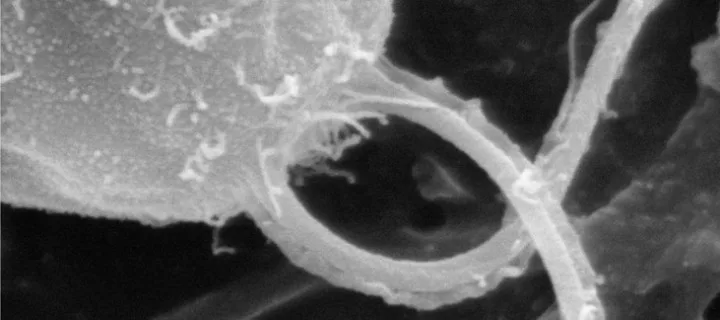
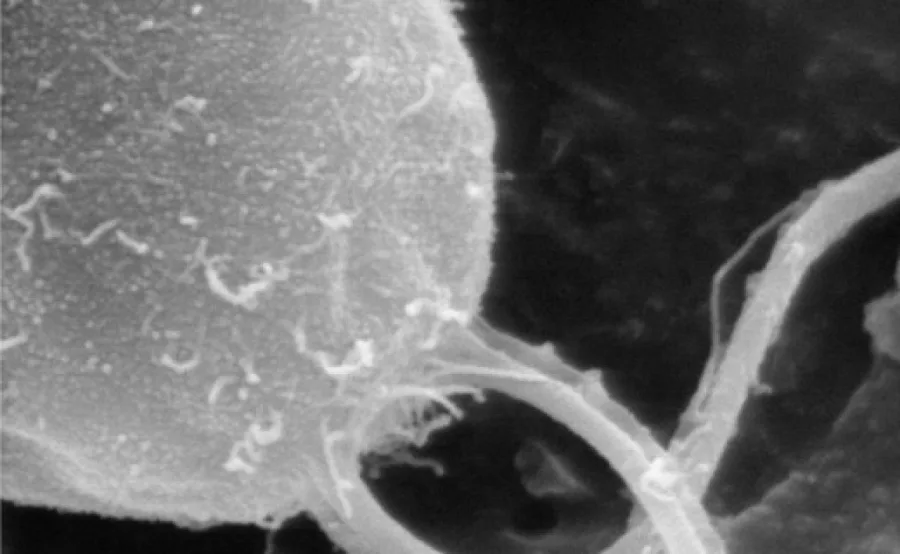
2011 — shown in Interdisciplinary Project I.
Background: It is evident that (broadly speaking) the scientific fields of genetic- and biotechnology are advancing at a lightning pace thanks to ample mainframe networks. The complete sequencing of the human genome (2003) by the HGP (Human Genome Project) required a period of 13 years and a great amount of patience from hundreds of scientists from over 40 countries. According to Josef Penninger (IMBA), such a venture would now take roughly five weeks (given increased computational performance). Alone in the medical realm, achievements are pending on the not-so-distant horizon in the coming years, like flying master delicacies by Heston Blumenthal in a medical land of milk and honey. Be it osteoporosis, SLE, MRSA, HIV, malaria, Buruli ulcer, cancer, or even the aging of cells itself – a war has finally been declared against death (and this time also with pretty good odds for success). Without going deeper into the ethical problems of this development here (which would fail miserably), it can be seen in history that smashing innovations have a tendency to infinitely stretch and be stretched to both their positive and negative poles. (Until one cries). Recently, Craig Venter (J. Craig Venter Institute) successfully synthesised the complete genome of a M. mycoides bacteria for the first time and planted it into a “wild-type” version, which only reproduces synthetically. Through the electron microscope we can now look into the “eyes” of the first life form created entirely by human hand. Shamed be he who claims a biological meltdown isn’t pre-programmed.
Molecular risk management: As with the ethics of genetic- and biotechnology (and for the same reasons) I will not further comment the not-yet-existing societal superstructure (e.g., internationally coordinated genetic and biotechnological legal and control systems). Even an IAEA could not prevent atomic accidents. What should be thought about, though, are practical exit strategies. The human immune system will have its problems with artificially generated bacteria and viruses. As we are not one-day mayflies, there is also little hope that evolution will train our internal stronghold against undesired guests and to recognise the invisible in a suitable timeframe. We are going to need a new programmable and controllable immune system.
Intelligent nano-swarm-robotics: The development of molecular swarm-cyborgs is recommended. They will be programmed for a concrete genome (a genome group), injected, and can be activated and deactivated in a controlled manner. The “mechanical part” of the nano-cyborg (“handmade” out of carbon atoms with atomic force microscopy), once it has docked onto an antibody, pulls the respective bacteria/virion into a collecting bag (e.g., from an S-layer protein network). When the collecting bag is full, the nano-cyborg moves to the molecular waste incineration plant, likewise a protein and DNA denaturalisation complex on alkaline basis yet to be developed. Not because of robot-ethical principles – no, alone on the grounds of a resource-technical perspective, such nano-cyborg swarms should not simply be expunged. In the optimal case they will be vaccinated at birth and remain in the body for life. They need refuges, place to retreat. Loci for regeneration and energisation. These synthetic organs are molecular metropolises. They serve as a programming interface and as an ATP power plant. Inside them is hustle and bustle, heavy traffic. Nutrients must be transported, and denaturalisation remains must be sorted and transported to metabolism interfaces. A bacterial flagellum cluster is planned as the drive system for both the nano-cyborgs themselves and for the molecular protein garbage trucks.