 Apply
Apply
Apply
Apply
Art & Science is a four-semester, English-language master’s programme that takes an inter- and trans-disciplinary approach to fields of study drawn from the arts and sciences. As a result, it is suitable for students who have completed artistic or non-artistic studies, who have an active curiosity and a willingness to experiment, and seek to expand their skills through trans-disciplinarity.
You can download the programme flyer here.
Central to the programme’s approach is the appropriation of different academic discourses - aesthetic, scientific, economic or technological - that provide a critical understanding of social developments and are useful for the students’ own projects. A central element of the Master’s programme are the annual cooperations with partner institutions; past examples include CERN in Geneva or the Royal College of Art in London. The students develop works in relation to the thematic concerns of the partner institutions, while being free to choose the formats and artistic methods that best suit their project. A constant exchange between the participants and the teaching team accompanies this process.
The Art & Science department is located in Otto Wagner’s Postsparkasse from 1906, one of the most important buildings in Vienna’s architectural history. The Art & Science programme involves the formation and elaboration of universal knowledge that is produced through a high degree of internationalism and student diversity. This provides a context in which all our students are recognised as experts through the professional experience they bring with them. The great openness of the programme and the breadth of issues it addresses reflect a transforming world whose social challenges clearly cannot be regulated and solved by specialists of a single field, but by people who think and work in an interdisciplinary way.
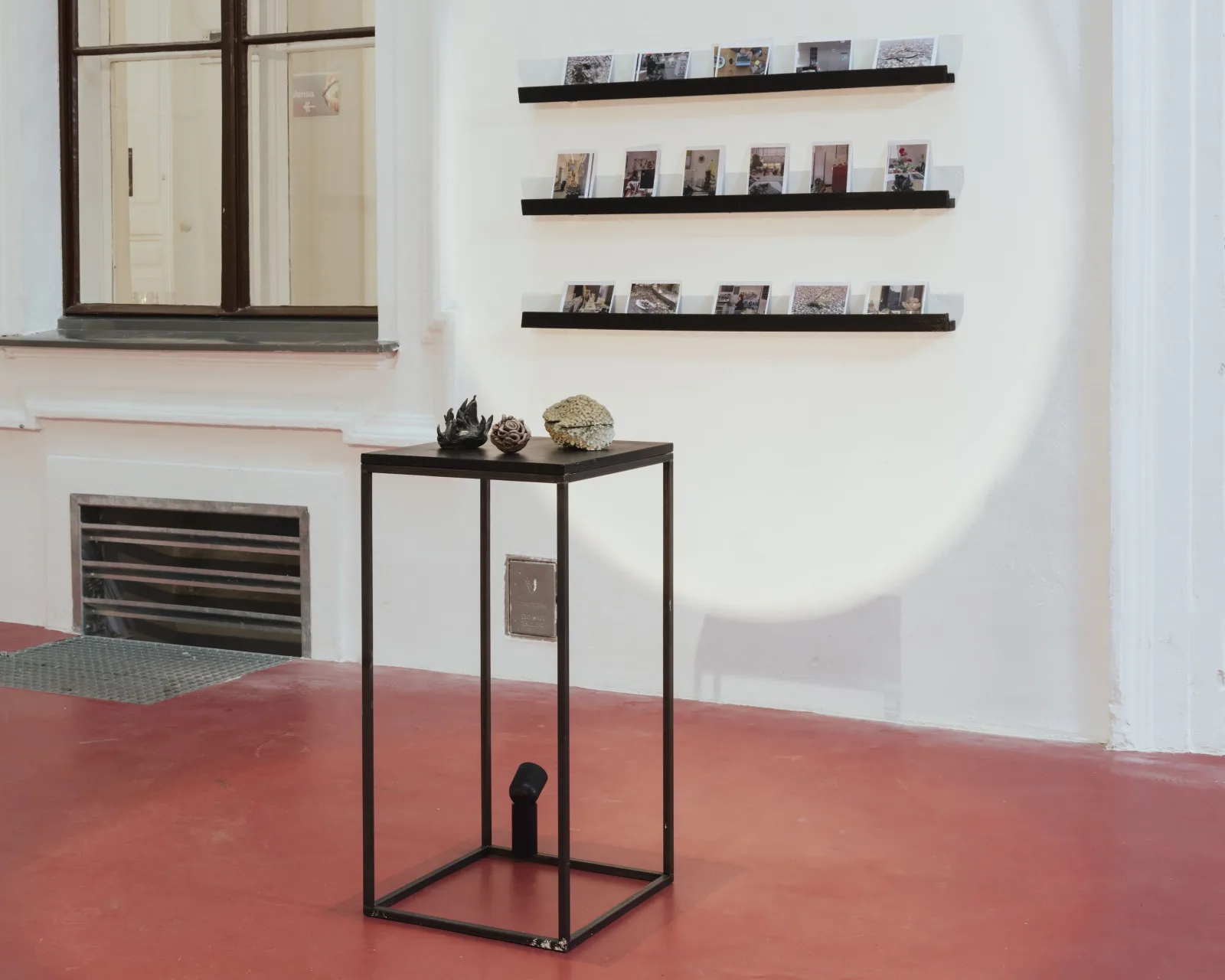
In the context of our teaching the medium of the exhibition has turned out to be a very fruitful intermediate and therefore is now included on several levels in the teaching and training at Art & Science. One reason why exhibition making plays a central role in the practical and theoretical teaching is that exhibitions simultaneously work with a variety of different design resources and media technologies and allow both the content of art and science to be communicated through expansive means. In this way inherent connections can be emphasized in a more emotional manner and experienced sensuously.
Apart from the creative and practical skills that are acquired in this way, exhibitions are also a good opportunity to explore different ways of personal expression and cooperation – both in artistic terms and in the sense of knowledge transfer. The employment of exhibition planning as one special skill can thus become the basis for various professions, such as curator, communicator or designer.
In each academic year, cooperation with different international institutions, researchers and artists takes place in the practical and theoretical teaching, which makes the programme highly flexible and allows the focus of the content to be adapted to current developments. In the same way, this also applies to artistic reflection and artistic practice.