 Apply
Apply
Apply
Apply
The University of Applied Arts Vienna at Ars Electronica 2026
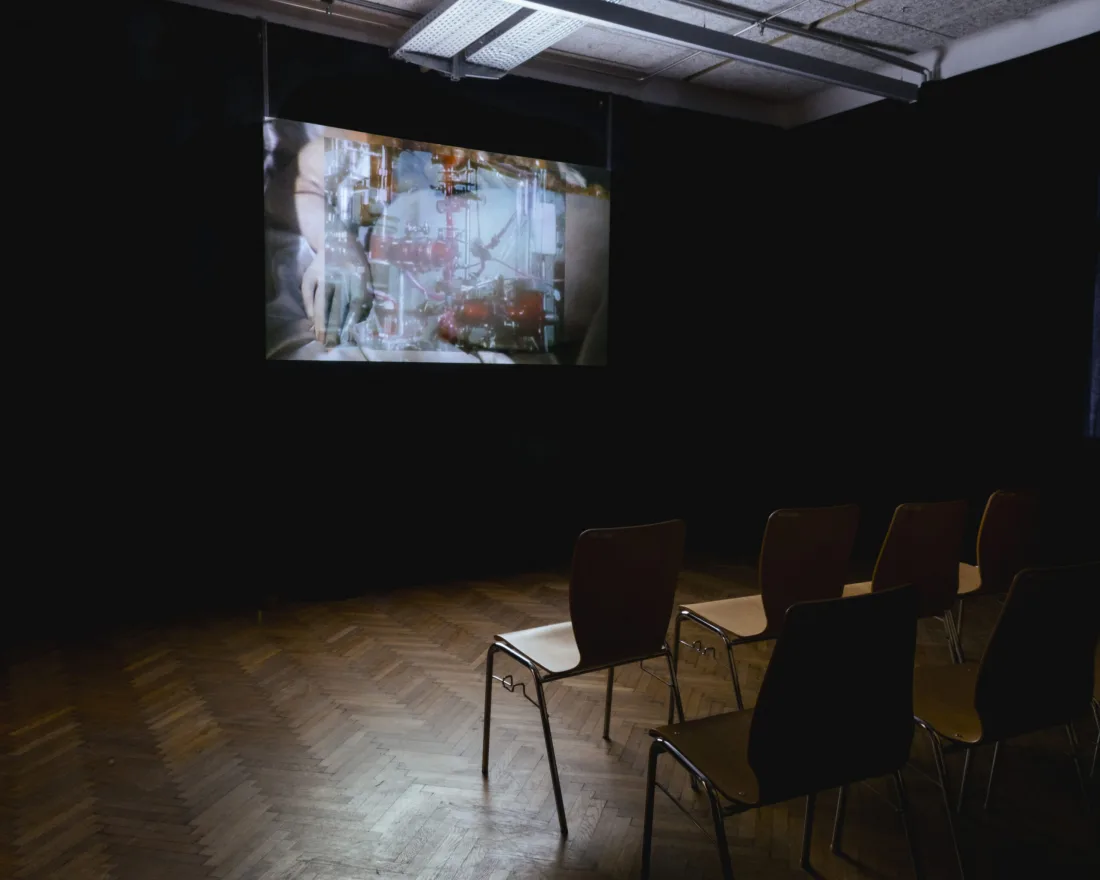
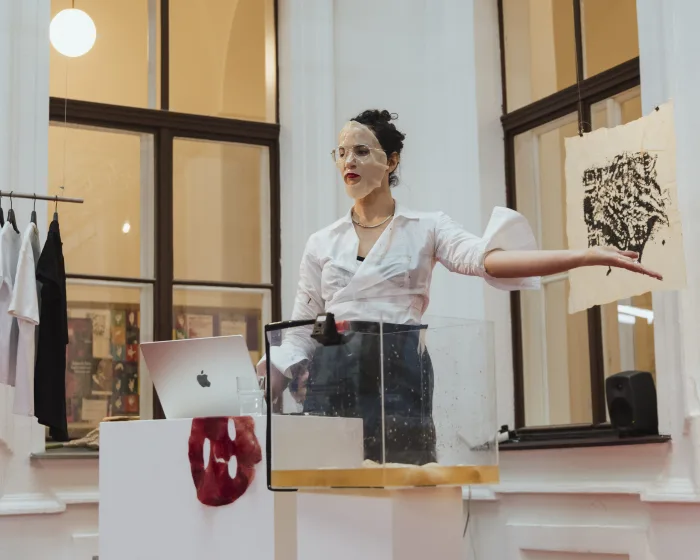
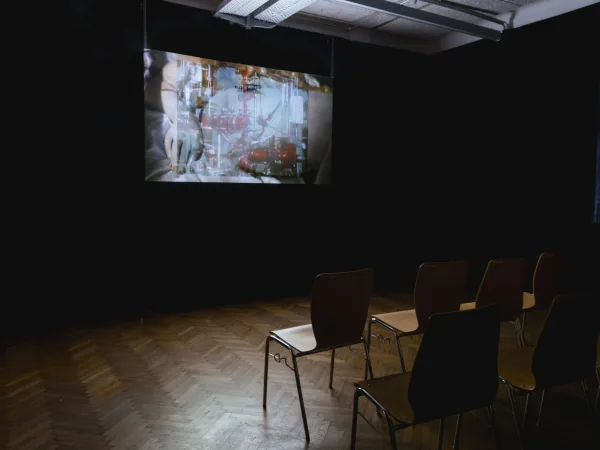
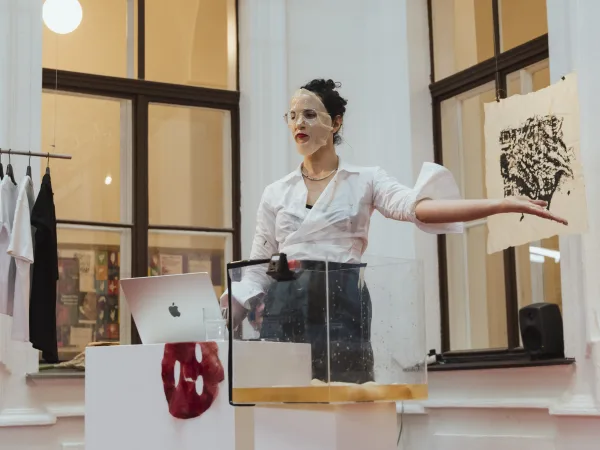
Two Art & Science master’s works were part of Playthings of Touch, the Angewandte’s exhibition at the Ars Electronica Festival 2026: Found in Translation by Dunia Sahir and metabolic_girl by Camille Belmin. The exhibition ran at the JKU MED Campus in Linz from 9 to 13 September 2026.
Six works from the Angewandte Vienna explore different ways of touching the world through play with objects and through the living, changing matter of bodies. A shared question runs through them all. What happens when we get in contact, how does it affect the surroundings and ourselves?
Playthings of Touch brings together six works from the University of Applied Arts Vienna that share a single conviction. Understanding does not begin with observation, but with contact, whether that contact is direct, withheld, or felt only as a trace of what has been touched and taken away. Across these works, knowledge is something reached by touching, squeezing, holding, and being changed by what is held, or by what remains just out of reach.
Some of the works treat the object as a plaything, not a toy, but something turned over in the hands and understood through play rather than analysis, where the act of handling becomes a way of thinking. Play becomes a method of inquiry here, a way of approaching difficult questions, from artificial intelligence and power to history and complicity, through the body’s direct, haptic encounter with an object that acts back. Others turn to the body itself as living, changing matter, looking at scientific models that render the invisible tangible, living cultures whose growth and decay mirror planetary ecological processes, or hybrid figures suspended between human, machine, and material, present mostly through what they leave behind or refuse to fully reveal.
Together, the six works ask what happens when we make contact, and what is left when contact does not occur. What can a plaything teach us about power, and what can a withheld touch teach us about the body.
Works
Experimental Game Cultures (Prof. Margarete Jahrmann)
Transmediale Kunst (Prof. Jakob Lena Knebl)
Art & Science (Prof. Virgil Widrich)