
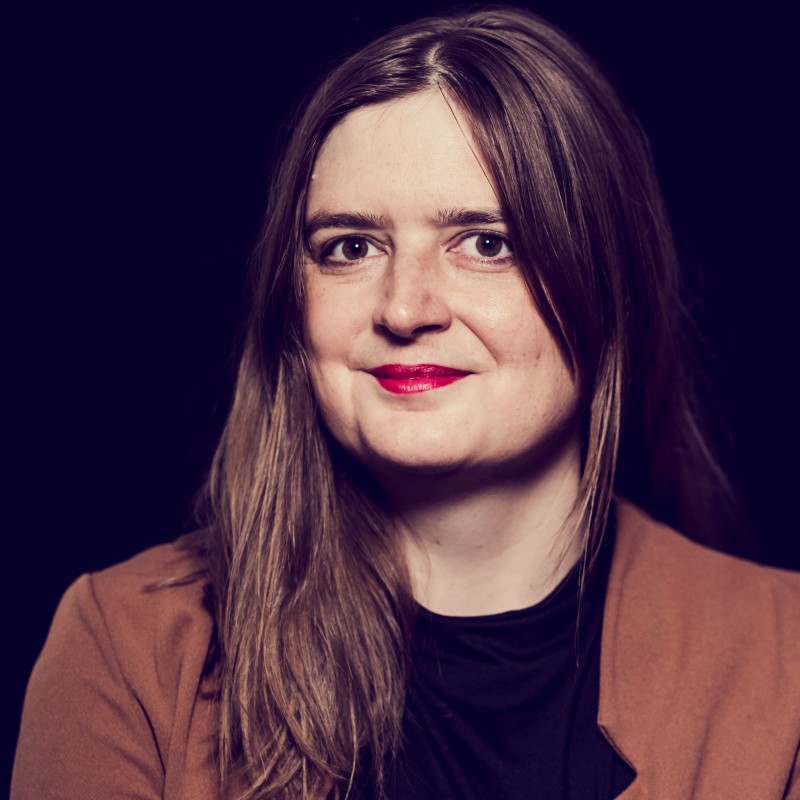
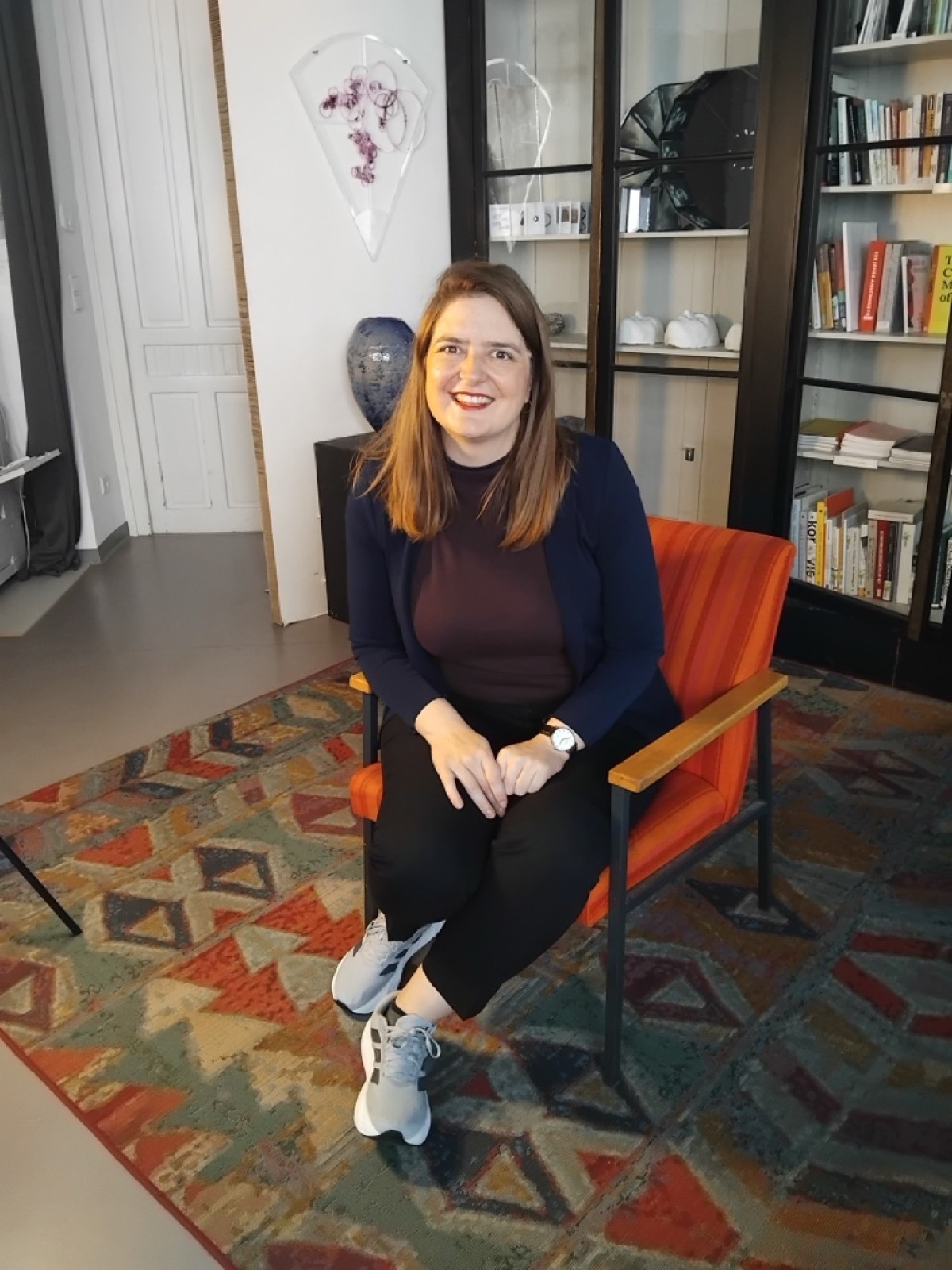
Photo © Press The Button / Ana Daldon, 2026
Your Inconsistencies Will Save You
A Master Portrait with Ana Daldon
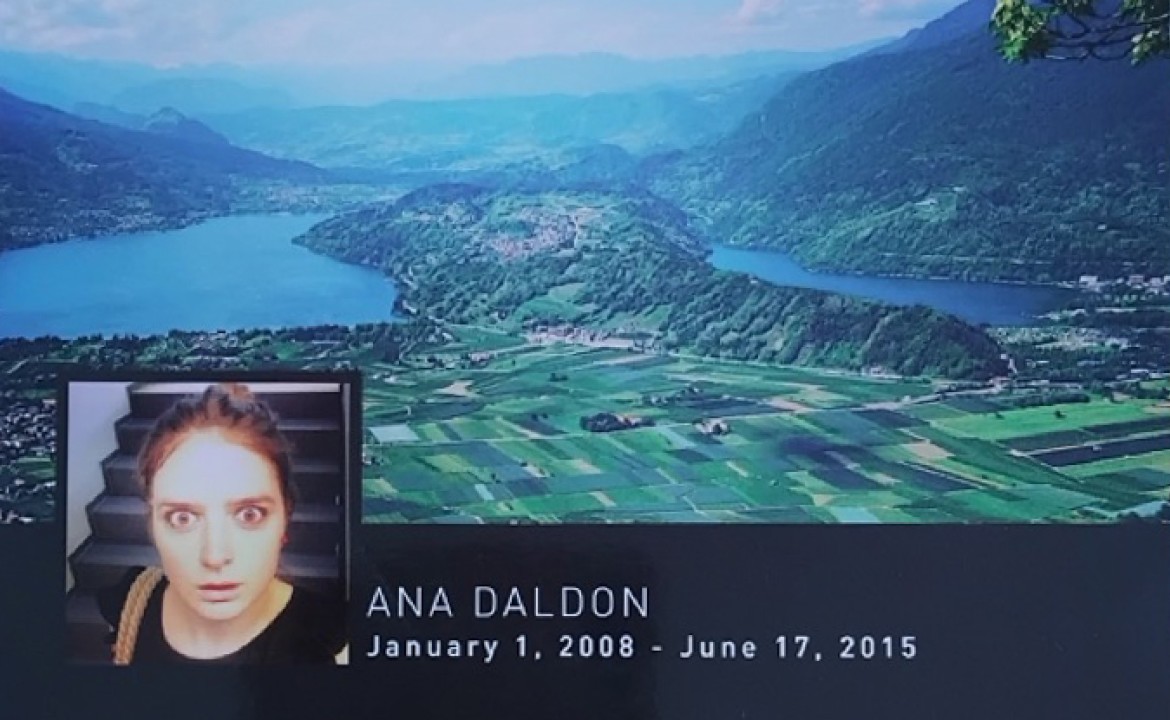
Photo © Ana Daldon. Cover of the hardcopy 'Facebook'
Ana, you moved from physics and science communication toward interdisciplinary projects - when did you first become aware that your path was not linear?
Coming from physics and mathematics, I was trained within a very structured and logical way of thinking. At the same time,
I always felt a strong creative drive - a need to explore, to play with languages, and to move beyond fixed disciplinary boundaries.
These aspects were never contradictory, even if this combination is not always common.
How has your background influenced the way you perceive complexity, systems, and inconsistencies in your interdisciplinary practice?
My background in physics gave me a strong sense of structure and intellectual security, although at times this could also
feel limiting or even intimidating. Approaching other ways of thinking later on - and learning to value different disciplines
more equally became both a challenge and an expansion of perspective.
Would you describe your personal path as a transition from science to something else, or rather into a space where different fields coexist in tension?
It was less a rupture than a gradual process of reorientation. Over time, however, I learned not only to navigate this coexistence,
but also to appreciate it. One becomes increasingly aware of operating within different frameworks - or within several at
once. That awareness deepens with experience. Today, as I teach, I also find myself able to articulate and transmit this dual
perspective quite clearly. At the same time, these different fields continue to coexist within me in an ongoing dialogue rather
than as fully separated domains.
Do you try to resolve inconsistencies between disciplines?
No, on the contrary, I tend to stay with them. They are not something to eliminate, but something to work through and often
signal the moment where different systems of knowledge meet without fully merging; something meaningful can emerge.
I have become increasingly aware that every foundational education, especially a scientific one, carries implicit assumptions and biases that often remain invisible from within. In many contexts, certain forms of knowledge are privileged while others - particularly the humanities, social sciences, or psychological perspectives - are still more easily dismissed as secondary. This imbalance between disciplines is something I encounter constantly, and it remains an important point of attention in my practice.
"I can decide whether to emphasize differences and let tensions remain visible, or instead work with methods that operate
across disciplines with a more general validity."
How do you experience friction between methods and languages?
It depends. When I begin to understand different systems more deeply, friction becomes a conscious choice. I can stay within
the formalism of a single field, or deliberately mix approaches and experiment across them.
This flexibility is what I find most productive. At the same time, I do not see this “it depends” as a form of relativism.
It is not about avoiding clarity or responsibility, but about being able to read context and respond to it in a precise way.
It is a situated form of decision-making.
I also think that this kind of “depends” should be passed on - mitgegeben - to younger generations. Not as uncertainty, but
as competence: the ability to navigate complexity without flattening it.
"Friction is not something to avoid; it is something that can be activated, modulated, or softened depending on the project."
What was the topic of your master's thesis at Art & Science?
At the time, I became very interested in how digital environments were beginning to create new forms of space, time, and identity.
I was fascinated by what happens to storytelling and public self-representation on social media profiles after death. I developed
these questions through a project called Virtual Heritage. Today the landscape is quite different: many aspects have become regulated, and practices around digital memory are more
established. In fact, I am not sure about using the term "virtual" today. We probably speak of "digital heritage", which reflects
broader shifts in how digital environments are understood - as spaces that are deeply embedded in reality rather than separate
from it.
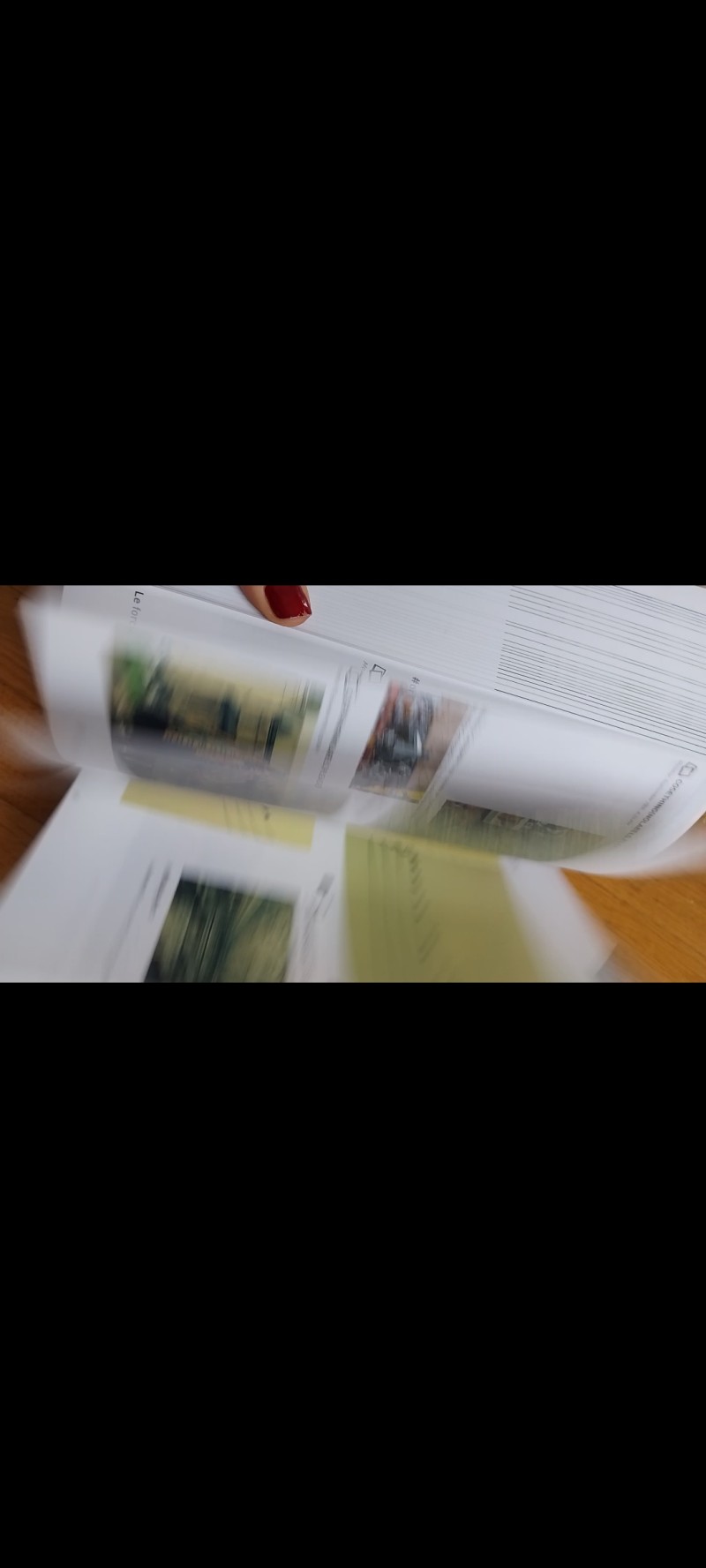
For the final installation and performance, my entire Facebook archive was sent to be professionally printed. It consisted of 486 pages containing everything except
videos. But unfortunately, the material did not arrive in time and could not be shown.
In retrospect, there is also a conceptual contradiction in trying to understand a “virtual heritage” by materializing it in
print - similar to artist Michael Mandiberg’s attempt to print Wikipedia in order to grasp its scale in physical form. These
kinds of archives exist and evolve within the network itself.
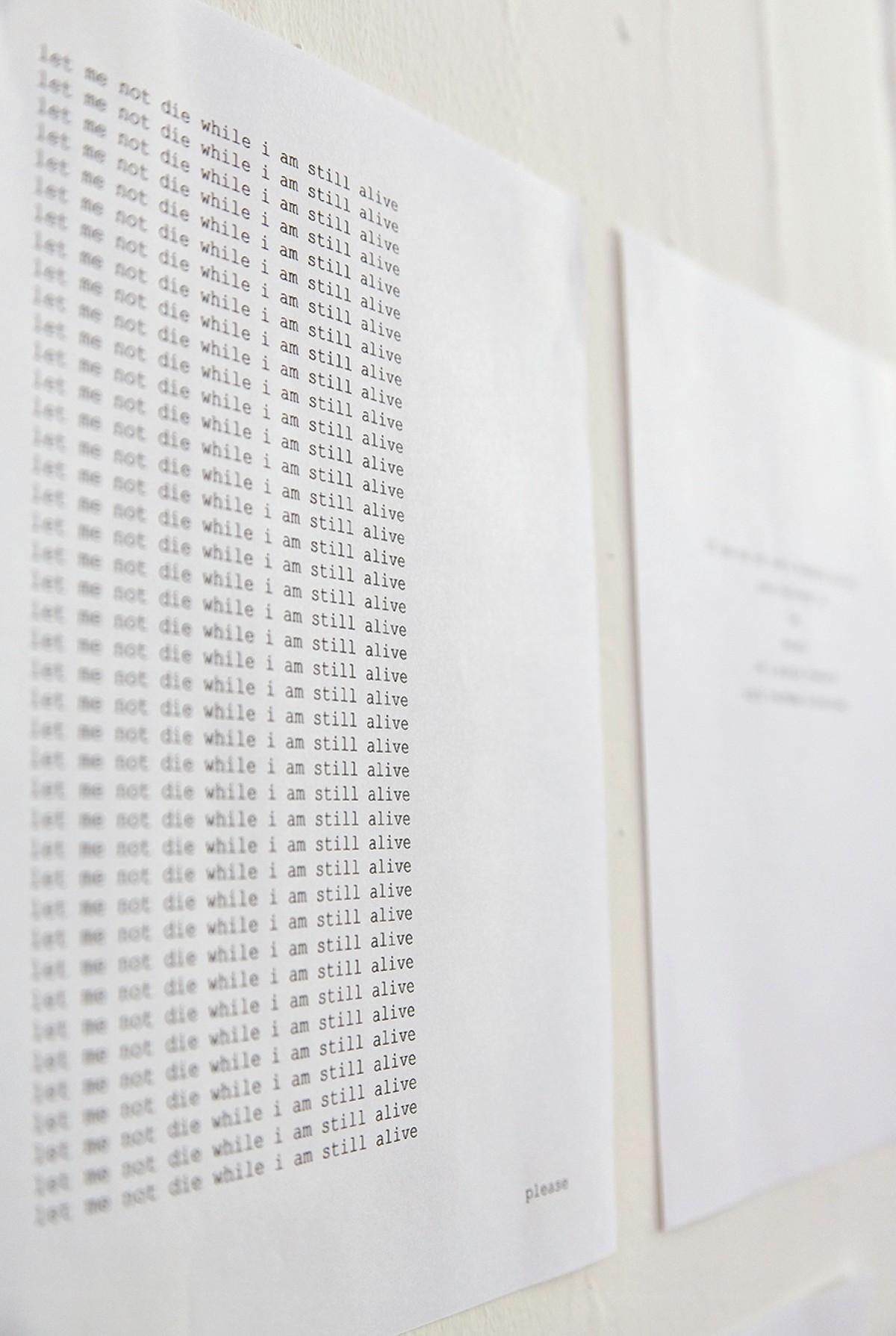
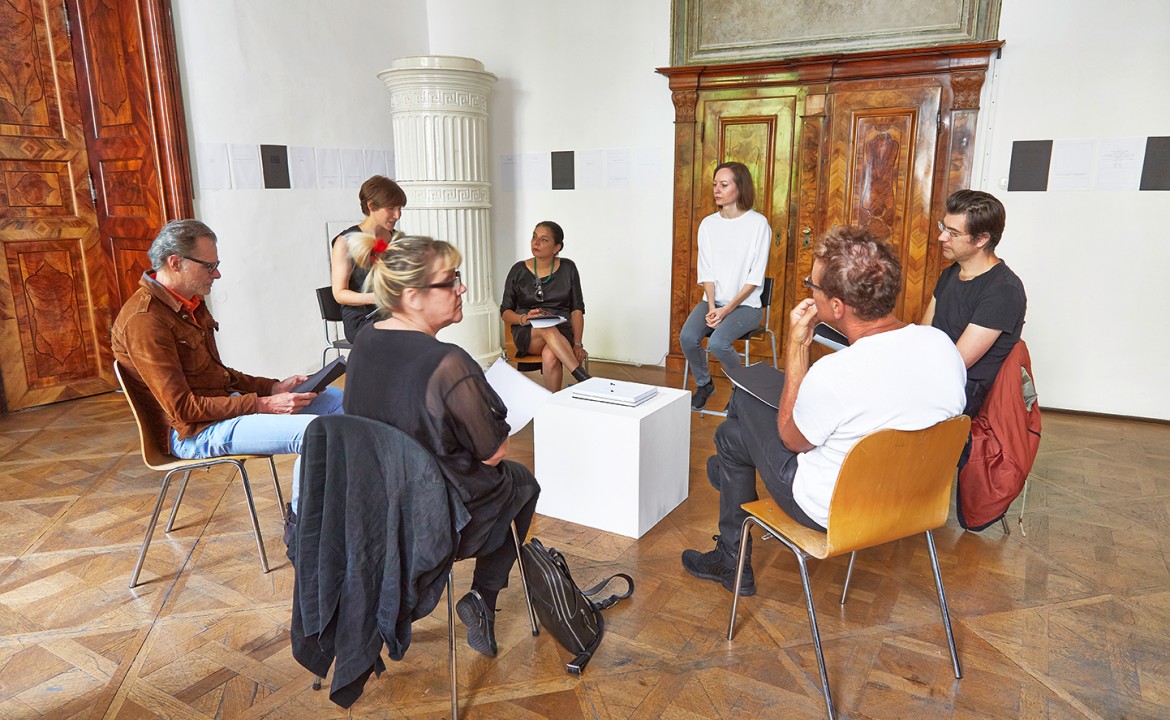
Ana Daldon master's project presentation, 2015. Photo © Art & Science
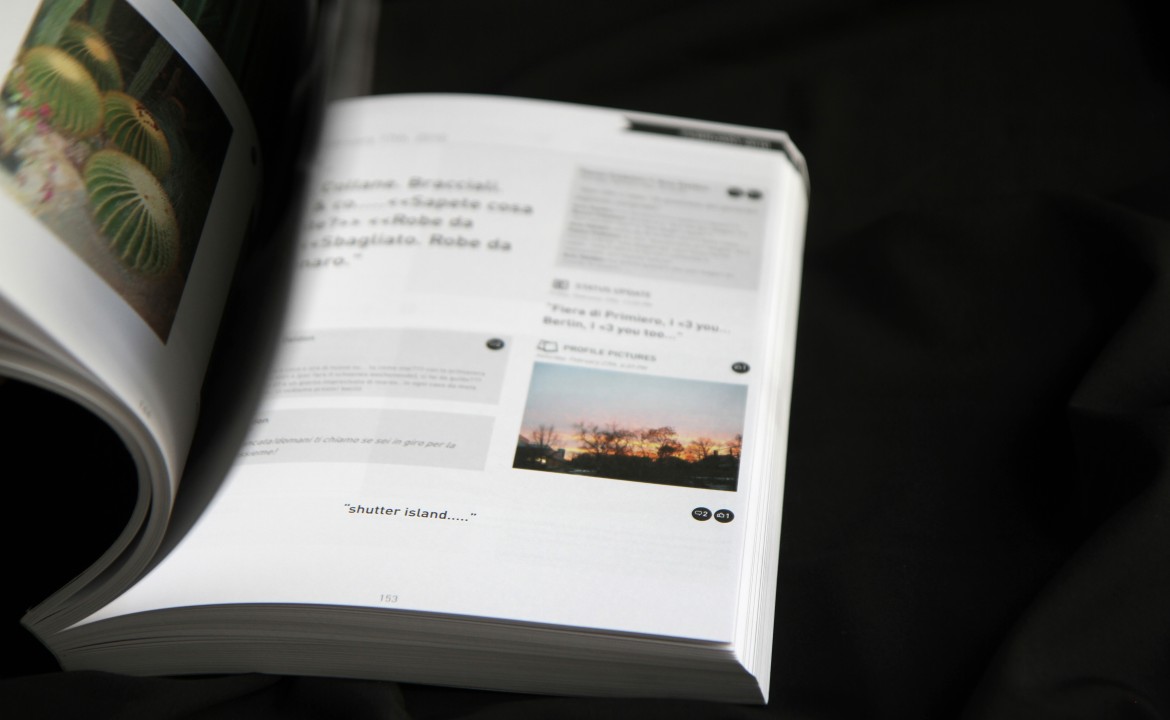
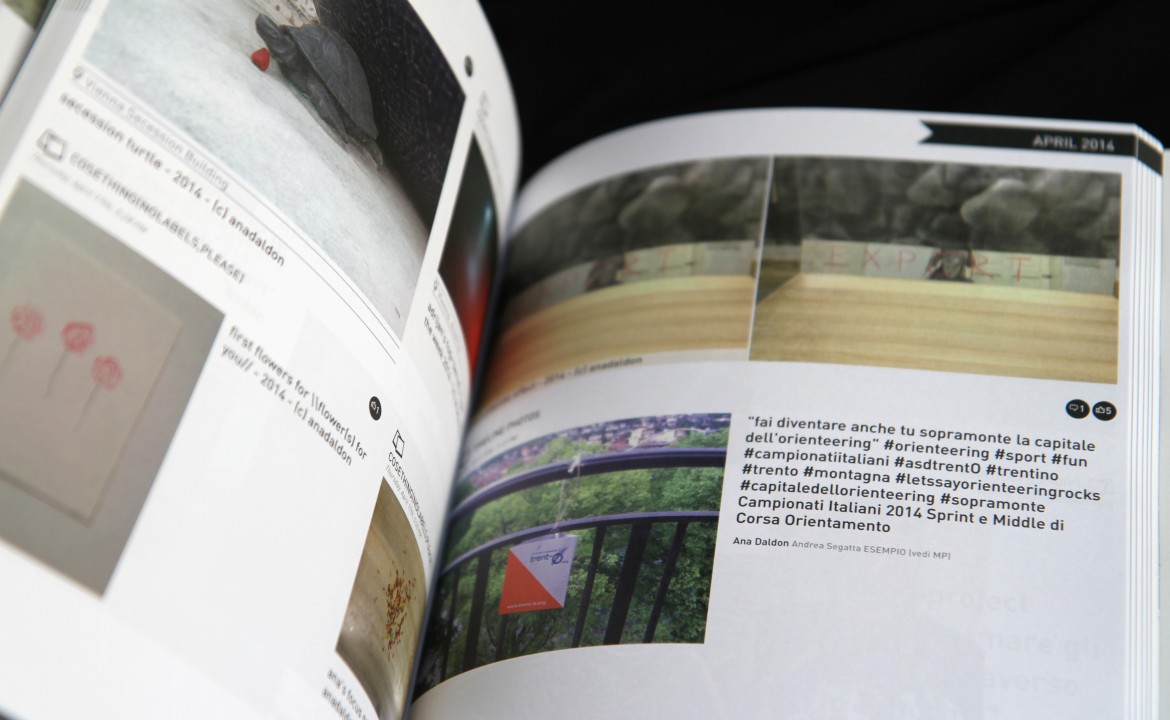
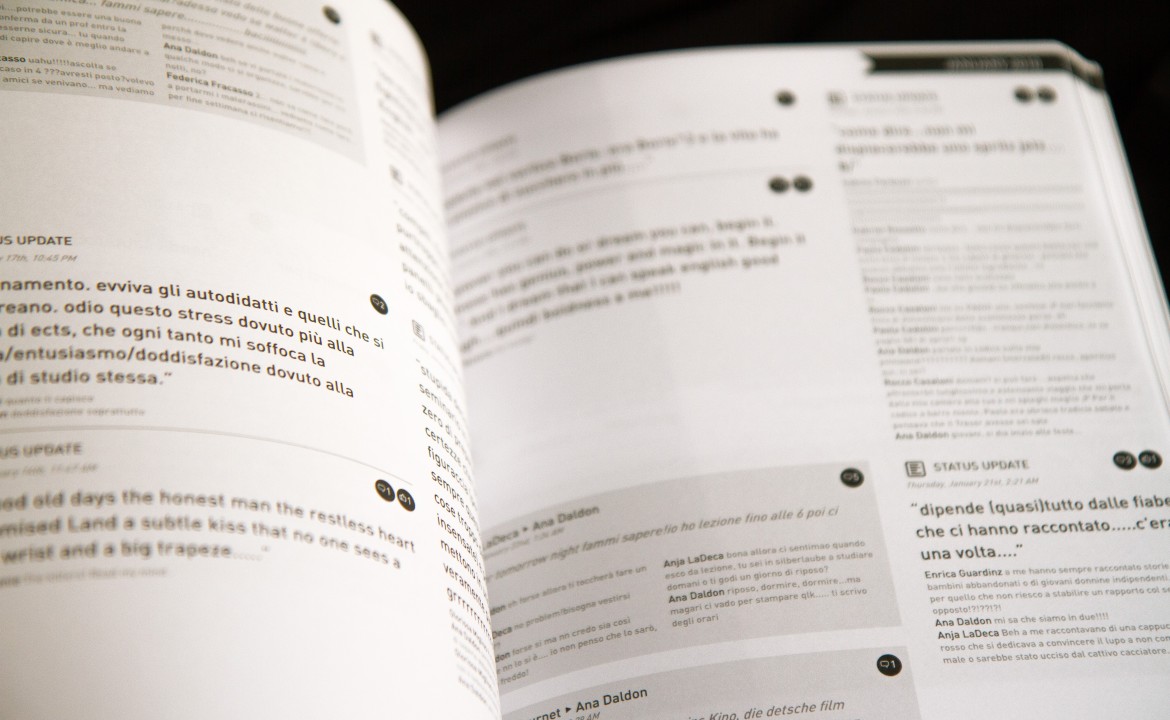
The original printed Facebook, Photo 2026 © Gerda Fischbach
Today, this facebook archive has also acquired a historical dimension. The platform’s development becomes visible almost as
a form of media archaeology. What originally began as part of a master's thesis installation now reads as a media artifact:
a document that not only preserves personal traces, but also records early transformations of social media interfaces, behaviours,
and digital rituals.
Have you continued working on these themes?
In a way, yes - although after Virtual Heritage I actually distanced myself considerably from social media platforms. At the time, I became more interested in observing
these environments critically rather than inhabiting them directly. I returned to a more active engagement with social media
later, when I became a content creator for the podcast project Sapore di Sacher - Stories of Italians in Austria. In that context, I realised that the experience of an international community functions
almost like another form of “&”, similar to the relationship between art and science. It becomes a way of inhabiting an in-between
space and of searching for language to describe what it means to exist simultaneously “in Italy” and “in Austria”.
More recently, I have also been focusing on writing and translation. Among the projects I feel particularly connected to is Transletting, a poetic translation programme based on reciprocal translation practices. Participants translate one another’s poems, and what emerges is not simply linguistic transfer, but the creation of new spaces of meaning. Misunderstandings themselves become productive: one begins to see what shifts, what resists translation, and how one relates to one’s own work once it inhabits another language, as in the poems I contributed to the project, Accenti come cicatrici and Heimat. There is something deeply interdisciplinary in this process as well. Translation is never purely linguistic; it involves perception, interpretation, structure, culture, and identity.
More recently, I have also been focusing on writing and translation. Among the projects I feel particularly connected to is Transletting, a poetic translation programme based on reciprocal translation practices. Participants translate one another’s poems, and what emerges is not simply linguistic transfer, but the creation of new spaces of meaning. Misunderstandings themselves become productive: one begins to see what shifts, what resists translation, and how one relates to one’s own work once it inhabits another language, as in the poems I contributed to the project, Accenti come cicatrici and Heimat. There is something deeply interdisciplinary in this process as well. Translation is never purely linguistic; it involves perception, interpretation, structure, culture, and identity.
Art, Science, MINT?
I am increasingly interested in how MINT education is being rethought, particularly in relation to teaching practices. I have
clearly perceived and studied this shift in recent years, especially in terms of what remains and what disappears in the process.
I notice a growing move towards the acronym MINT in German and STEM in English, alongside a gradual distancing from the word
“science”. This is not only a terminological shift, but also reflects changing cultural and educational imaginaries, and raises
the question of what we actually mean today when we say “science”.
"MINT education is the German framework covering mathematics, informatics, natural sciences and technology aka STEM."
It suggests a more applied and interconnected understanding of knowledge, while also reorganising relationships between disciplines.
Especially how subjects like mathematics are taught, often still as isolated disciplines rather than as part of broader systems
of thinking. These reflections are closely connected to my teaching practice. In this context, I am also following a very
recent development in Austria: a new MINT Hochschullehrgang, designed collaboratively by all Pädagogische Hochschulen (PH)
in the country. It offers students a cross-institutional programme across different PHs, and it reflects precisely this broader
attempt to rethink and coordinate MINT education at a systemic level.
What would you say: are you more art or more science?
This recalls another question: are you more Italian or Bosnian? For those who live in-between positions, it is often impossible
to answer in a simple way. How do we relate to this need for categorisation? I think these questions come from a desire to
stabilise identity into something fixed and legible. But for me, they do not work in that way. Coming from physics and later
moving across different fields, I have learned that these categories are more porous than they appear. It is not about either/or,
but about shifting positions depending on context and situation. I do not experience myself as more art or more science. It
is more about moving between different constellations of practice and knowledge, depending on context.
"Interdisciplinarity is not about merging everything into a single unified system; it is about keeping differences active,
allowing distinct perspectives, methods, and forms of knowledge to remain in dialogue and generate new ways of seeing."
Finally, do you think inconsistency plays a role in how you navigate the ways of being?
Yes. I see inconsistency not as confusion or lack of direction, but as a way of not being forced into a single narrative. It allows movement between positions without needing to stabilise them permanently. It becomes a way of keeping complexity open, rather than reducing it to one explanation.
Thank you very much Ana, for sharing your thoughts and experiences with us.
Ana's Art & Science Master Thesis written component:
ANA DALDON
Sapore di Sacher | Podcast on Spotify, IG @sapore_di_sacher
T R A N S L E T T I N G, IG @translets
IG @lunedialmuseo, lunedìalmuseo
Virtual Heritage | Art & Science Master's project
Ana @Art&Science
Ana's Master Project @ECM/Angewandte
Master Portrait compiled and edited by Gerda Tschoerdy Fischbach, August 2026
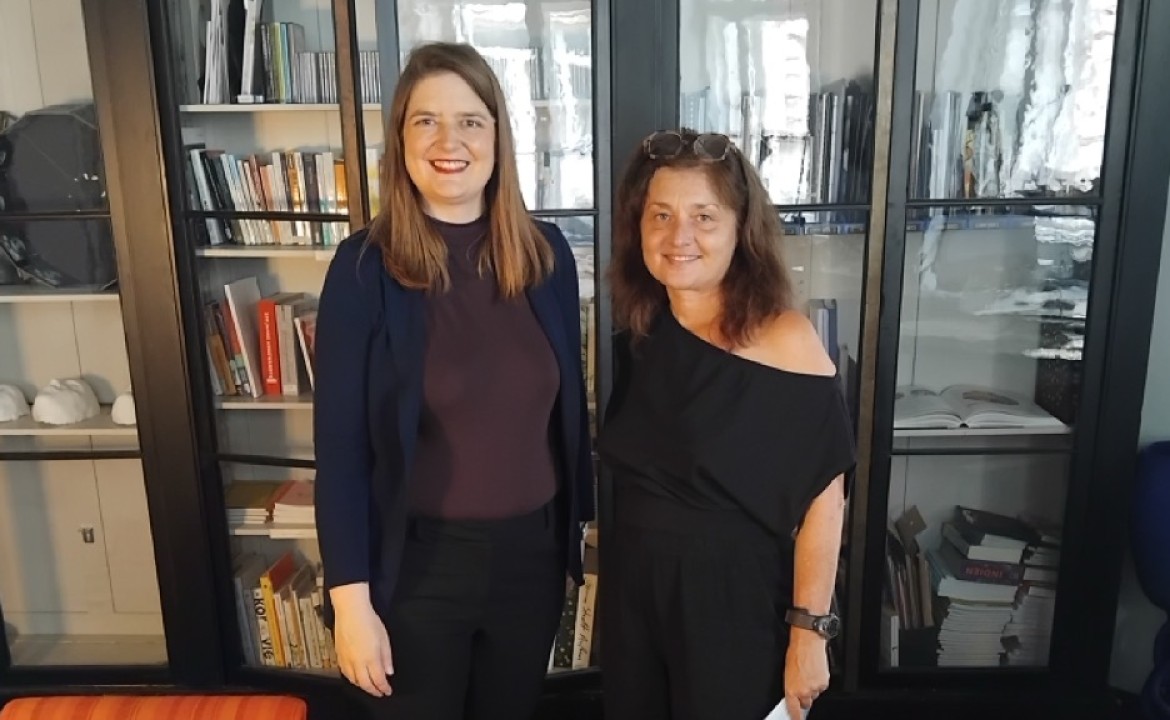
Ana visiting Gerda at the Art & Science Studio 2026, Photo © Dunia Sahir